
From First Servers to a Repeatable Intake Process
How early server arrivals became a consistent sequence for approval, receiving, inspection, testing, installation, and customer handoff.
- Milestone
- Published
- Updated
- Filed under
- service
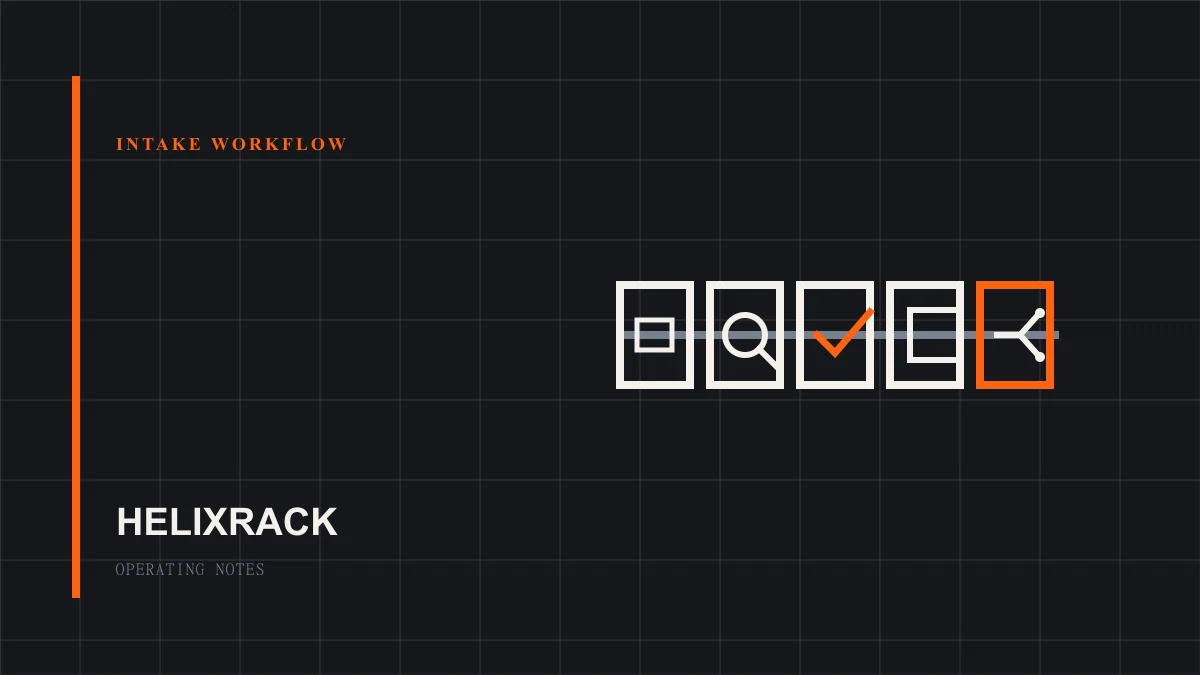
On June 30, 2023, we documented a repeatable intake process for customer-owned servers. The procedure gave approval, receiving, inspection, testing, installation, and go-live distinct states, so customers and operators could use the same language at every handoff.
The change reduced avoidable surprises. Rack, power, cooling, network, and access questions could be reviewed before a carrier arrived instead of after the shipping box was open.
1. Review the exact system before shipment
Intake began with the actual hardware configuration. The form collected the chassis model, dimensions, expected and peak power, power-supply arrangement, airflow, network interfaces, remote-management method, and technical contact.
Customers could also identify a migration window, recovery dependency, or authorized physical action that affected installation. Approval meant the proposed configuration fit an identified operating envelope. It did not reserve every open rack unit or authorize work outside the written scope.
2. Match and inspect the delivery
When equipment arrived, the team matched the package to the approved intake and checked its external condition. A package could be received without being ready for installation. A different chassis, visible damage, missing rails, or incomplete access information moved the intake back to review rather than forward to a rack.
Customer ownership remained clear throughout receiving. Helixrack documented custody and performed only the physical work authorized for that intake.
3. Test away from production assignments
Initial readiness checks took place at a test position before the server received production power, rack, and network assignments. The checklist looked for visible hardware issues and basic power, cooling, memory, storage, and remote-management conditions that could block a dependable handoff.
This stage was a facility-readiness check, not a prediction of every workload condition. Customers remained responsible for application testing, operating systems, data, backups, security, and the behavior of their own software.
4. Assign facility resources together
After the agreed checks were complete, the server received a reviewed rack position, power path, cabling plan, and network handoff. Those assignments were recorded together so a later operator could trace the physical and logical service without piecing it together from separate conversations.
If one part of the fit changed, the whole assignment could be reviewed before installation continued. That was especially important when a different power input, rail kit, cable route, or network interface changed the conditions approved at intake.
5. Confirm the customer handoff
Installation completion and go-live were separate states. Installation was complete when Helixrack had finished the approved facility-side work. Go-live occurred after the customer could reach the system and accepted the production handoff.
That distinction made delivery estimates and support conversations more precise. It also made clear whether the next action belonged to Helixrack or the customer.
Keep the sequence while the form evolves
The June procedure established the operating sequence, not a permanent form. We can refine capacity checks, authorization fields, and shipment instructions while preserving the same basic progression from review to handoff.
For a new shipment, send the current configuration through Helixrack.com. Helixrack will confirm the receiving window, installation scope, fit decision, and commercial terms in writing before the equipment is sent.