
Phase One Expanded the Elizabeth Facility
How Phase One expanded the Elizabeth facility to 1,200 square feet with five production racks, dedicated five-ton cooling, and a 30 kVA UPS.
- Milestone
- Published
- Filed under
- capacity
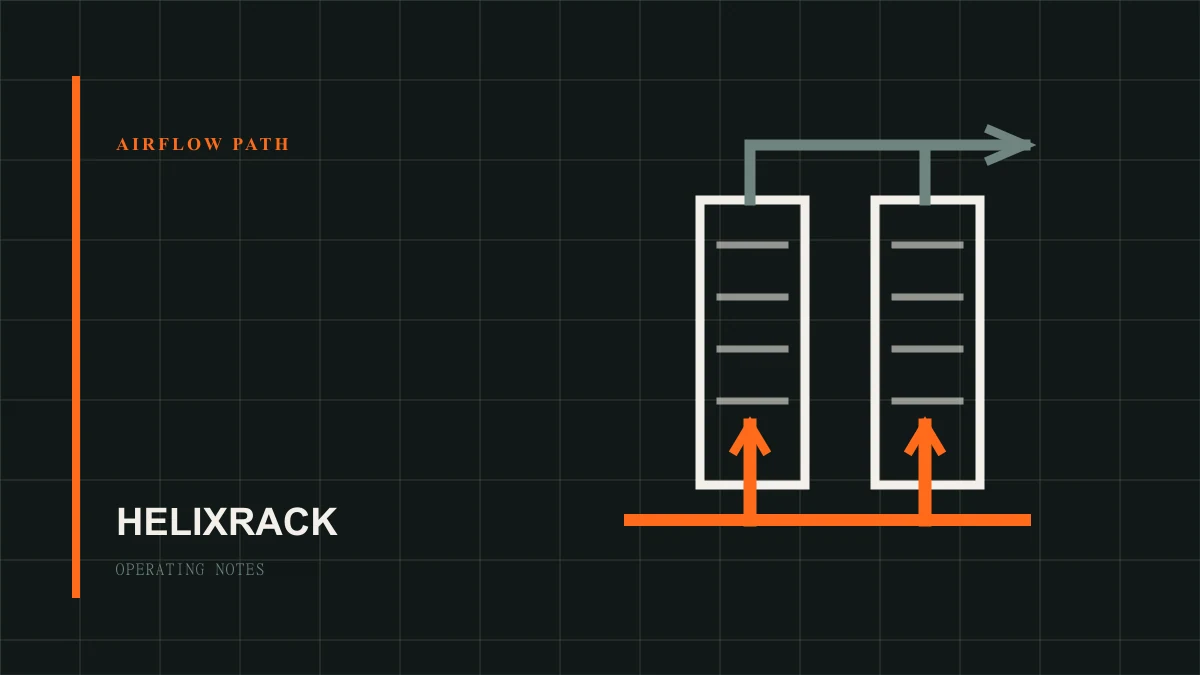
On May 7, 2023, we accepted Phase One of the Elizabeth facility expansion. The project grew the connected operating area from roughly 300 to 1,200 square feet, established five production racks, commissioned dedicated five-ton cooling, and connected a 30 kVA double-conversion UPS.
The project created more room for customer systems, but it did not turn every open rack position into immediate capacity. Each position still needed a suitable combination of physical fit, power, airflow, network access, cabling, and service clearance.
Connect the rooms as one environment
Phase One joined two operating areas under a single facility plan. The resulting 1,200-square-foot footprint held five production racks while preserving separate receiving and test space. Rack placement accounted for conditioned-air delivery, hot-air return, cable routes, maintenance clearance, and the ability to work on one system without disturbing its neighbors.
A qualified heating, ventilation, and air-conditioning contractor commissioned the dedicated five-ton system. A licensed electrical contractor completed and checked the regulated distribution work and the 30 kVA UPS connection. Helixrack defined the equipment layout, supplied project requirements, and handled appropriate non-regulated preparation and operating records.
Commissioning changed what the team could measure and manage. It did not eliminate placement limits. Cooling performance depended on the installed configuration and the route air took through a particular chassis, while electrical capacity depended on the complete assigned path and its required operating margin.
Separate receiving from production capacity
The capacity plan kept receiving and initial testing separate from production positions. Incoming equipment could be matched to an approved intake, inspected, and checked before it received a customer-facing rack and network assignment.
That separation also prevented staging space from being counted as sellable capacity. The same discipline applied inside the production rows. Open rail could be reserved for power distribution, switching, cable clearance, maintenance access, or equipment whose power and cooling assignment had not yet been approved.
An empty position was therefore only a physical observation. A deployable position required a recorded answer to several connected questions:
- Does the chassis fit and leave safe service clearance?
- Can the assigned power path support the reviewed operating states?
- Does conditioned air reach the inlet and return without avoidable recirculation?
- Are the cabling, network handoff, and management path ready?
- Can the equipment be installed or removed without disturbing a neighboring system?
Those checks kept the expansion focused on usable capacity instead of square footage, panel rating, or rail count in isolation.
Broaden protected-power planning
Phase One also installed a 30 kVA double-conversion UPS as the protected-power anchor for the connected operating area. Coverage remained tied to the actual connected load, equipment condition, stored-energy state, and reviewed operating envelope. Stored energy was treated as a bridge within a defined design, not as an unlimited source.
The acceptance record connected the physical inventory to those operating limits. Construction completion alone was not the finish line. Cooling, distribution, protected power, rack positions, cable paths, monitoring, and service access needed to work as one controlled environment.
What changed for customers
The expansion increased the range of positions Helixrack could evaluate for incoming systems. It also made placement decisions more explicit. Customers could provide one configuration and receive a review covering the chassis, expected and peak draw, power-supply arrangement, airflow, network requirements, and space needed for maintenance.
Capacity remains configuration-specific. A position that works for one server may not fit a denser, deeper, hotter, or differently powered system. For an actual decision, send the complete server specifications through Helixrack.com so the team can review them against available capacity.