
Why Helixrack Uses Customer-Owned Hardware
Why customers keep ownership and control of their servers while Helixrack operates the approved physical environment around them.
- Published
- Updated
- Filed under
- company update
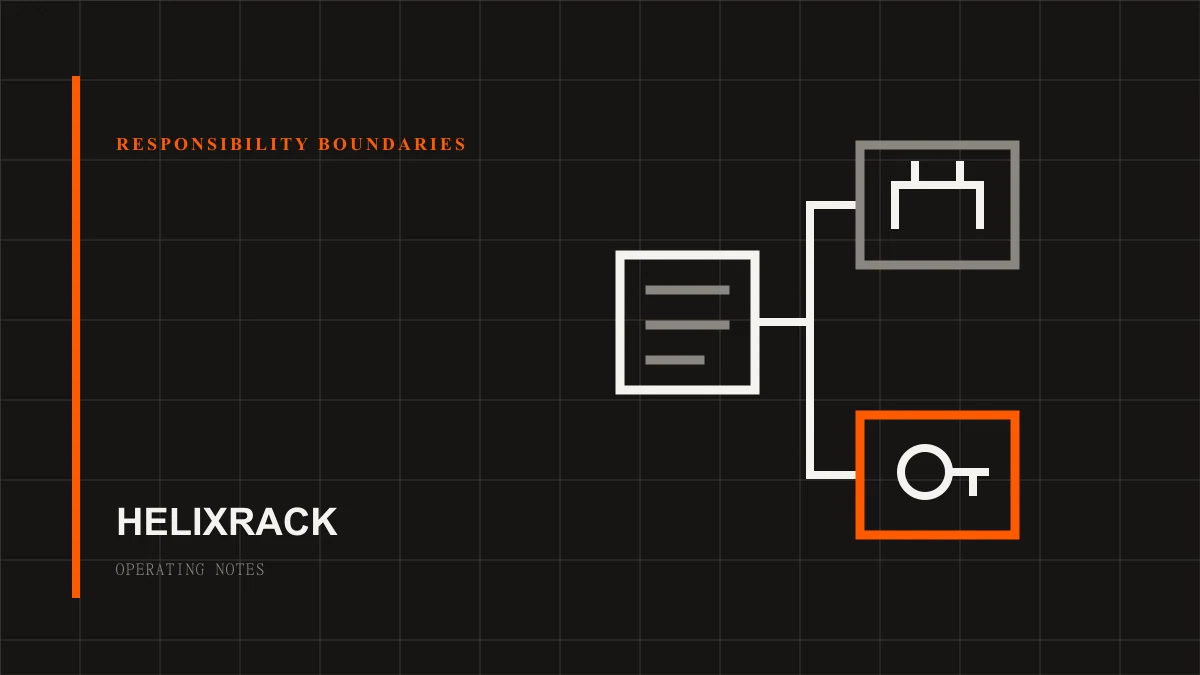
Helixrack uses a specific division of responsibility: customers own and administer their servers, while we operate the approved physical environment around them. The model is useful only when that boundary is clear before hardware ships.
The idea sat between two familiar options. Cloud infrastructure is useful when demand changes quickly or a team does not want to manage hardware. Running an owned server at home or in an office gives the operator more control, but also brings power, cooling, connectivity, noise, physical security, and after-hours access into the same room.
We make that third option practical for small deployments that fit the facility and service model.
Keep ownership clear
The customer purchases and owns the machine. Helixrack receives it, checks its condition, installs it in an approved position, provides the agreed power and network handoff, monitors the facility, and handles authorized practical work that requires someone beside the hardware.
The customer remains responsible for the operating system, applications, credentials, backups, access control, data, and workload-specific obligations. That boundary matters because it tells both sides who can make a change and who is accountable for the result.
Make the operating cost understandable
Ownership alone does not make a deployment economical. Hardware cost, expected life, utilization, support time, software, backups, and the cost of failure all belong in the decision. A steady workload may benefit from owned equipment, while a short-lived or highly variable workload may still fit the cloud better.
Our goal is narrower than claiming one model always wins. Customers should see the rack, power, outbound internet transfer, and support terms before shipping a server, then decide whether the complete arrangement fits their workload.
Review the complete fit
Each request has to answer practical questions before approval: Which hardware can the current room support? How will the equipment be identified and isolated? What installation checks are authorized? Who can approve go-live and respond when remote access is insufficient?
Those questions still shape intake. Available rail is only one part of capacity; power, cooling, network fit, service access, and operating reserve have to work together.
Helixrack provides month-to-month colocation for customer-owned servers. If you are weighing owned hardware against another deployment model, send us the exact server specifications through Helixrack.com before arranging delivery so we can review the complete fit.